


Report from the Salish Sea


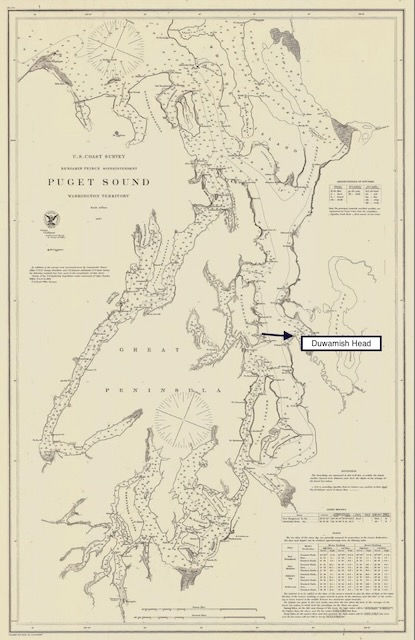
After two decades on the East Coast, I’ve returned to the Pacific Northwest and settled into a new home in a city that looks out over nearly ten miles of the vast Salish Sea. The land is Coast Salish territory known as Duwamish Head, the place where Coast Salish people welcomed Seattle’s first European settlers in 1851. From this overlook, the inland sea is a working waterway: Washington State ferries and passenger-only boats trace steady routes close to shore, deep‑draft grain ships move to and from the elevator at Pier 86, and powerful tugs shepherd barges and larger vessels through the marine corridors of Elliott Bay and Harbor Island.



Along the nearshore shallows, bands of kelp and shifting sandbars support a familiar assemblage of diving birds. Surf scoters, common mergansers, buffleheads, and western grebes regularly gather to feed, while bald eagles patrol overhead, occasionally dropping into the scene with a burst of drama. Far beyond this daily activity, the Olympic Mountains rise some 63 miles to the west, their snowfields catching the low winter light and framing the Salish Sea within a broader coastal ecosystem that links mountains, rivers, and estuaries.
Large marine predators now feature more prominently in this seasonal cycle. Transient (Bigg’s) killer whales, which specialize in hunting marine mammals, move through Puget Sound with increasing regularity, following the distributions of seals, sea lions, and porpoises. In recent years, gray whales have joined this pattern as well. Each spring, a small subgroup known as the “Sounders” departs the main northbound migration to forage in sheltered Salish Sea waters, frequenting shallow bays and estuaries such as the Snohomish River delta, Port Susan, and the shores off Whidbey Island. For several weeks to a few months, these whales feed intensively by rolling onto their sides and excavating soft intertidal sediments, targeting ghost shrimp and other burrowing invertebrates that concentrate energy in narrow bands of habitat.


Studies using photo‑identification, behavioral observation, and habitat mapping indicate that this is a specialized, learned foraging strategy, distinct from the benthic feeding tactics gray whales use on their Arctic grounds. The Sounders appear to pause their journey from Mexican breeding lagoons to high‑latitude feeding areas in order to rebuild fat reserves after a prolonged winter fast, taking advantage of dense, predictable prey patches that function as an energetic “spring bonus.” The repeated return of the same individuals over many years, and the occasional presence of apparent “apprentice” whales, suggests that this technique is transmitted socially, adding a cultural dimension to the already complex ecology of gray whales in the Pacific Northwest.
As we grow more familiar with this stretch of coastline, future explorations will follow these patterns more closely—offering natural‑history portraits of the whales, birds, and other species that share the Salish Sea, and tracing how their lives intersect with shifting ocean conditions and human uses of this remarkable inland marine ecosystem.
Sources
Learn more about the “Sounders” from the cetacean experts at Cascadia Research Collective here https://cascadiaresearch.org/project/north-puget-sound-gray-whale-photo-id-and-feeding-study/
More information with photos here https://www.ourwildpugetsound.com/journal/the-sounders-gray-whales-of-puget-sound


We're looking forward to hearing more as you both delve into your 'new' home waters :)
Welcome back to the PNW John and Pam. Beautiful photos!
Ed Y