


Children in the Stars: A Creation Story Remembered

Updated: Apr 12

For years Machu Picchu lived in my imagination like a half-remembered dream—stone terraces rising into vapor, clouds parting to reveal a geometry no civilization had any right to perfect. We talked about it often, that pilgrimage along the Inca Trail, a ribbon of stone winding from the Sacred Valley into sheer myth. The Galápagos was an easy add‑on, a naturalist’s dessert course after the banquet of the Andes. But Machu Picchu was the magnet, the place that seemed to hum across miles and years.
When we reached Cusco—Qosqo, as the Quechua still call it, “the navel of the world”—I was too aware of altitude and itinerary to think about anything metaphysical. The city glowed with thin, unwavering sunlight; even the air seemed stratified with meaning. Our guide, a energetic woman who threaded myth into history without warning, told us the Incas believed this valley to be the living body of Pachamama, Mother Earth herself: mountain for bone, river for vein, cloud for breath. I nodded appreciatively, my polite secular curiosity intact. On the schedule I noticed something called a “Mother Earth Ceremony,” and my instinct was to cross it off—another bit of tourist choreography. I made a mental note to cancel. Naturally, I forgot.
Two days later, after a long walk through the highlands, our guide reminded us that el sacerdote quechua—the Quechuan priest—was waiting down by the river. Reluctant but compliant, we followed. The man who greeted us, Juan, could not have been taller than five feet, compact as a condor chick, with hair as black as volcanic glass and eyes that, even before he spoke, conveyed an amused patience with tourists who didn’t yet believe. His assistant, Jaime, explained that Juan would lead a despacho: an offering ceremony meant to restore ayni, the balance between humans and the sentient world. Every stone, every gust, every heartbeat had its counterpart, he said. The purpose of the ceremony was to acknowledge that reciprocity—to give before you ask.
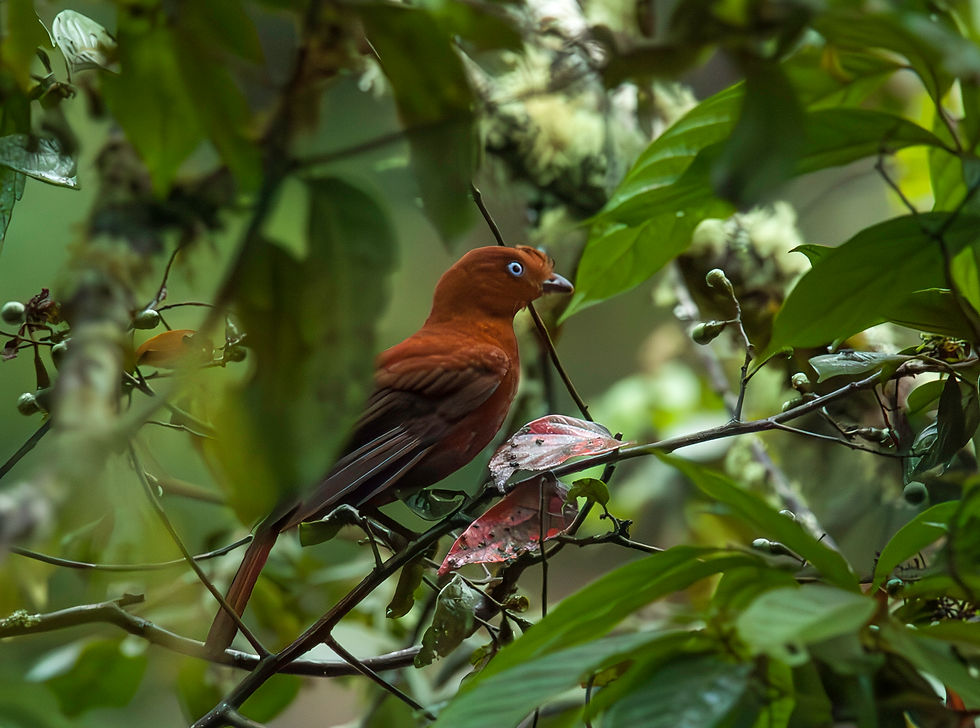
Juan arranged feathers, kernels of maize, coca leaves, wildflowers, and colored yarn onto a woolen blanket, the ingredients of our despacho. With deliberate grace he assembled the bundle, murmuring prayers that hovered just beyond comprehension. As twilight steepened to violet, Jaime lifted a small Andean lute and began to play a melody that darted through the wind like a bird itself. And then, impossibly, two Inca wrens appeared and perched behind the priest, their song chiming precisely in key with the music. The sound was delicate but insistent, the kind of coincidence that makes you wonder whether the world might be articulating a grammar we’ve simply forgotten.
When it was my turn, Juan placed his hands on my temples, his skin dry and cool, and gestured for silence. “Piensa para la Pachamama,” Jaime whispered—think for Mother Earth. I closed my eyes and wished for grandchildren. It felt almost sheepish, the smallest of human longings. Later, back at the lodge, over pisco sours and shallow laughter, Pam admitted she had made the same wish. The coincidence amused us; we let it evaporate in the high‑altitude air.
Three weeks later, Machu Picchu and the Galápagos already seemed like hallucinations we’d once rented. Then, one morning, our daughter called—her voice electric, nervous. “I think I’m pregnant.” Hours later, our son phoned with the same confession. My mind flew unbidden to that ceremony: the riverside dusk, the wrens, the smell of wild smoke. I opened my iPad, typed “despacho ceremony Pachamama,” and felt a ripple of something larger than chance. The Quechua believe that an honest despacho opens a corridor between the visible and invisible worlds, that intention—if pure—travels along that corridor like music on the wind. Evidently the message had been received.



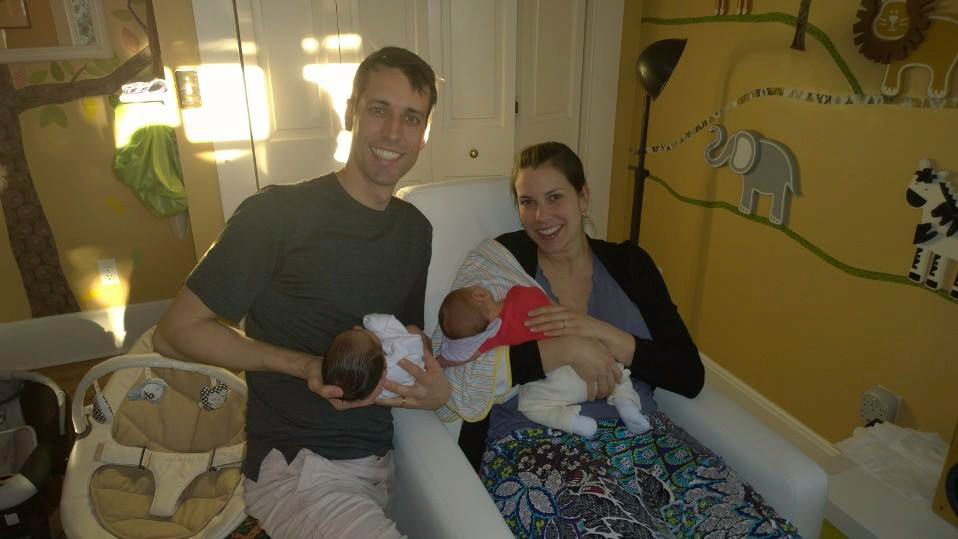
Both pregnancies were confirmed, astonishingly with the same due date: April 1st, a cosmic wink delivered in clinical precision. When the due dates shifted later in the term, they shifted together, as if tethered by some invisible thread. The babies arrived seventy hours apart—healthy, radiant, and impossibly real.

Now, twelve years later, their twin birthdays remind me of that night beside the river, and of Machu Picchu itself—the citadel that still refuses all final explanations. Standing there weeks later, above its terraces sculpted into the mountain’s ribs, I’d felt an uncanny steadiness, as if the earth beneath were quietly breathing. The Incas did not carve those stones to dominate nature but to align with it, to complete it; every wall was an act of conversation. Perhaps that’s what the ceremony was too—an exchange, brief but binding, between the seen and the unseen.
I sometimes recall Juan’s face—the flicker of amusement, the serenity of someone who trusts the world to do its part—and I think: we weren’t making a ritual offering to Mother Earth so much as entering into contract with her. And she, characteristically, delivered in full.
I had almost forgotten the woolen blanket Juan gave us at the end of the despacho—the same one upon which he’d arranged the feathers and coca leaves. Folded in our luggage, it seemed little more than a keepsake. For years it stayed tucked in a trunk, until one day Pam lent it to a friend struggling to conceive. The friend, more skeptical than reverent, touched it with a half‑joking hope. She conceived soon after. It’s happened more than once since then—couples we know, brushing its rough alpaca weave, quietly daring to believe that something might still be listening.
I tell myself coincidence is enough of an explanation, and sometimes it is. But on certain evenings, when memory opens like the valley at dusk, I imagine Juan carrying our despacho into the sacred mountains, laying it into a hidden fire. Maybe it’s still burning somewhere high in the Andes, the smoke rising through cloud and starlight, taking with it all our wishes—slowly, invisibly—home.


Comments